When you are building a custom home, design is easy to think about as an expense. A larger kitchen costs more. Better materials cost more. Custom millwork costs more. A more detailed construction set takes more time. Professional design adds another investment before construction even begins. But what if the question is not simply how much does good design cost? What if the more important question is:
What does thoughtful design add to the home?
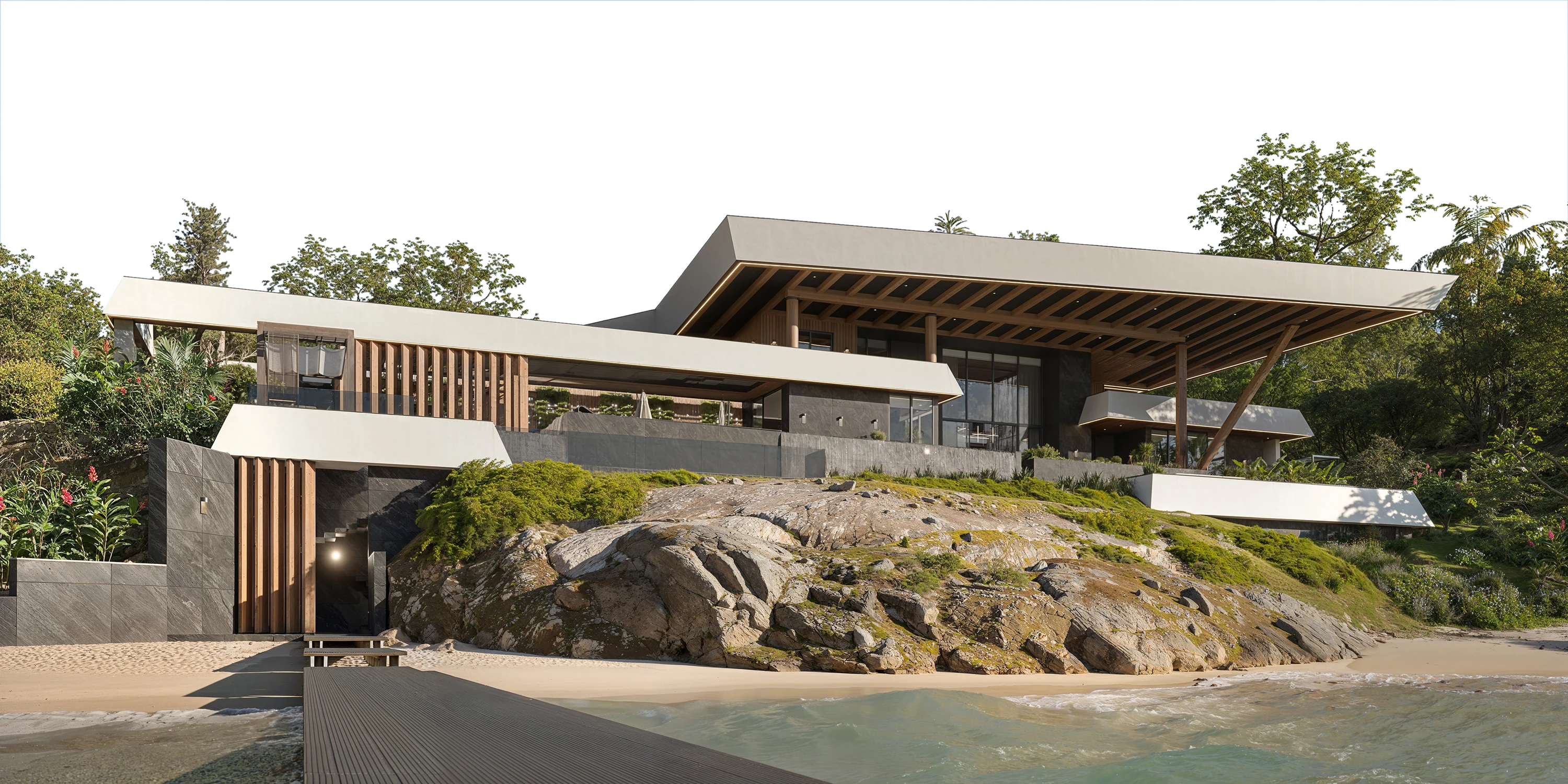
That was the question behind a recent conversation between AVI Design Studio and real estate professional and homeowner Mike Novak. Mike has spent years working in real estate and construction. His father built more than 200 homes, and Mike grew up around residential construction and development before focusing on real estate sales. He and his wife, Rachel, have also built their own homes multiple times. For their newest project in Mukilteo, Washington, they approached the home from two perspectives at once. It needed to be a place their family would want to live. It also needed to be a long-term investment. And that raised an interesting question. Could thoughtful design make this particular home worth 35% to 40% more than a more typical version of the same property?
Watch the full conversation with Mike Novak and Edward from AVI Design Studio:
Does Design Really Affect How Much a Home Sells For?
According to Mike, design has a significant influence on how buyers respond to a home, from the exterior to the interior. The reason is simple: buyer expectations have changed. The days when a few upgraded finishes could automatically make a house feel special are gone. Buyers increasingly expect a certain level of design in the homes they consider, particularly at higher price points.
They notice how a home comes together. They notice the architecture. They notice the materials. They notice the kitchen. They notice how the primary suite feels. They notice whether the floor plan makes sense. And they notice something that is harder to put into a specification:
how the home makes them feel.
Mike describes design as both aesthetic and emotional. When buyers enter a home that feels warm, inviting, and thoughtfully assembled, they may relax, spend more time in the space, and engage with it differently. That reaction matters because buying a home is not purely a financial calculation. There is financial analysis. But there is also emotion.
Why Does Design Matter More in a Slower Market?
Design matters in any market. But when buyers have more choices and homes take longer to sell, differentiation becomes more important. Mike's view is that the slower the market becomes, the more design matters. When homes are selling regardless of condition, presentation may matter less. When buyers have time to compare properties, the homes that feel more considered have more opportunity to stand apart.
This is particularly relevant to luxury real estate. At the high end, buyers are not simply comparing bedrooms, bathrooms, and square footage. They are comparing experiences. Two homes can have similar specifications and very different perceived value. The difference may be in the way the architecture frames a view. The way the kitchen connects to the living space. The proportions of the primary suite. The relationship between indoor and outdoor spaces. The consistency of materials throughout the home. Or the feeling created when someone walks through the front door.
What Do Buyers Actually Notice When They Walk Into a Home?
One of the most interesting points from the conversation is that buyers do not necessarily need to be told that a home is well designed.
They experience it. Mike describes design as something buyers can feel. A home can feel warm, inviting, and thoughtfully put together without anyone explaining the individual decisions behind it. That makes design different from many other components of a home.
You can explain the square footage. You can explain the appliances. You can explain the mechanical systems. But the experience of the home is something buyers have to feel for themselves. This is why design is not simply about adding expensive finishes. It is about making the entire property feel intentional.
Which Parts of a Home Matter Most?
From a real estate perspective, Mike identified three areas that deserve particular attention when preparing a home for the market.
1. The kitchen and living space
The kitchen and living area have become what Mike describes as the “heart of the home.” Rather than separating formal rooms, many homes now prioritize spaces that support everyday life, cooking, entertaining, and gathering. The question is not simply whether the kitchen is large enough. It is whether the kitchen, living space, architecture, and circulation work together.
2. The primary suite
The primary suite needs to feel appropriate to the level of the home. At a higher price point, buyers expect more than a bedroom and bathroom. They expect an experience. The proportions, amenities, materials, lighting, storage, and relationship between spaces all contribute to that experience.
3. The overall floor plan
Even beautiful finishes cannot compensate for a floor plan that does not work. Does the house flow? Do the rooms relate to each other? Does the circulation make sense? Are the spaces arranged around the way people actually live? These decisions are made long before the first piece of stone or cabinetry arrives on site. That is one reason custom home design can have such a significant influence on the finished result.
Does Interior Design Increase Home Value?
Interior design does not create a guaranteed percentage increase in a home's value. There is no universal formula where spending a certain amount on interiors automatically produces a specific return. But interior design can influence how a home is experienced and perceived.
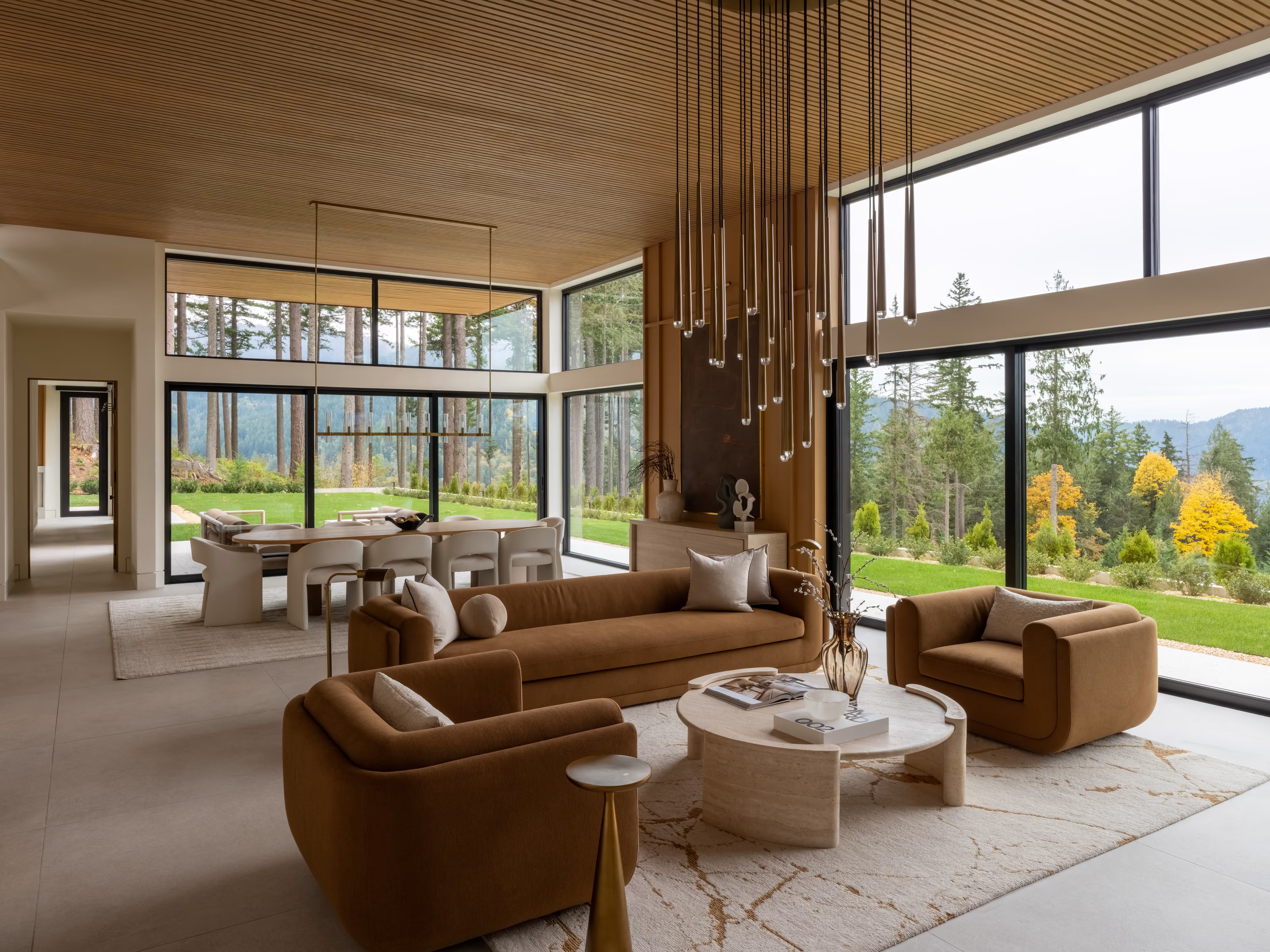
Consider two homes with similar square footage, similar locations, and similar construction quality. One has a disconnected collection of finishes. The other has a coherent material palette, considered lighting, well-proportioned spaces, intentional millwork, and furniture layouts developed around the architecture. The physical difference may not always be obvious from a specification sheet. The experiential difference can be significant.
For a buyer, that difference can affect whether a home feels finished, considered, and appropriate for its price. That is where luxury home interior design becomes more than decoration. It becomes part of the overall design of the property.
Why Is Designing for Value Different From Simply Making a Home More Expensive?
This distinction matters. More expensive does not automatically mean more valuable. A larger material budget does not guarantee a better home. Adding expensive features simply because they are expensive can create a house that costs more without creating a proportionate increase in perceived value. Thoughtful design works differently. The goal is to determine where additional investment actually improves the experience of the home.
That might mean investing in:
The architectural relationship to the site
A stronger floor plan
Better proportions
More considered material transitions
Custom millwork
Lighting
Indoor-outdoor connections
Architectural detailing
3D visualization before construction
More complete construction documentation
The value comes from how these decisions work together. A custom home should not simply contain expensive things. It should feel like every decision belongs there.
Why Did Mike Hire a Design Team After Building Homes Himself?
This may be one of the most revealing parts of the conversation. Mike had already built homes. He understood construction. He understood real estate. He and Rachel had designed and built their own homes before.
So why hire AVI?
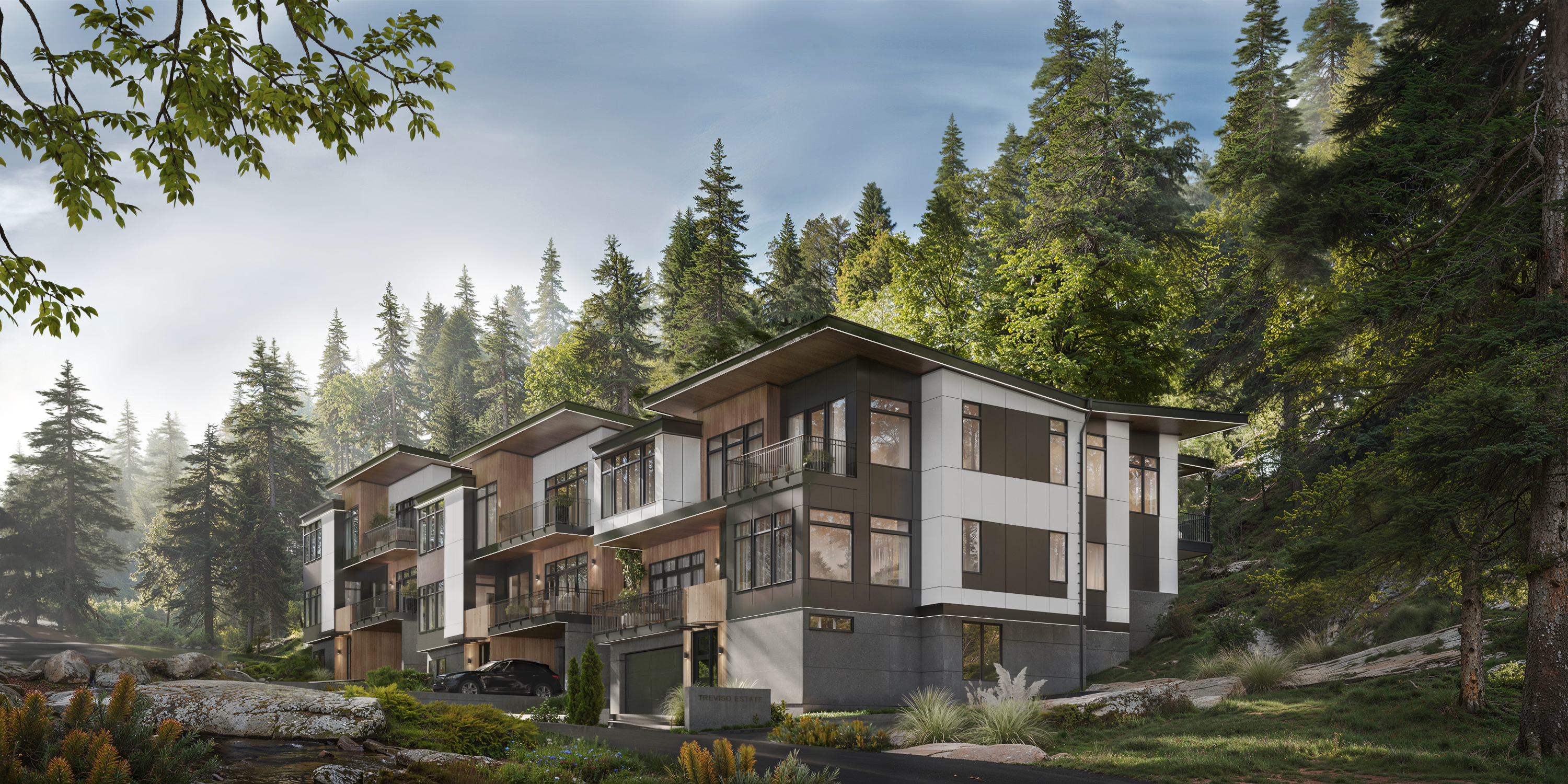
Because this property presented a different level of complexity and potential. The Mukilteo property is a double lot with an unobstructed 180-degree view of the Sound and Mount Baker. The site is sloped, and the design incorporates significant structural steel to achieve the desired amount of glazing and preserve the views. Mike recognized that bringing all of those elements together would require substantial time, experience, and design attention. In other words, the question was no longer: “Can we build a house?” It became:
“How do we make the most of this property?”
What Changes When You Can See the Home Before It Is Built?
One of the advantages Mike specifically discussed was 3D modeling. Even someone experienced with architectural drawings can miss things when looking at a two-dimensional floor plan. A 3D home design model provides another way to evaluate the project.
You can begin to understand:
How the spaces actually feel
How materials work together
How proportions relate
How architectural elements affect the room
What the experience of the home might be before construction
For Mike, this was particularly meaningful because he had experienced the consequences of decisions made too quickly in previous projects. He gave a simple example: in a previous home, the bathroom floors were not heated. It was a relatively small decision, but one that he and Rachel later regretted because the tile was consistently cold. That is the nature of custom home design. The most expensive regrets are not always the dramatic ones. Sometimes they are the decisions that seemed too small to spend time thinking through.
Can Better Construction Documents Reduce Costly Mistakes?
Design does not end when the rendering looks good. It has to survive construction. That requires documentation. For the Mukilteo project, Mike describes the construction set as approximately 70 pages, with dedicated sheets for individual rooms and trades, including detailed quantities for materials such as baseboard and hardwood flooring. That level of documentation serves a specific purpose. It turns design intent into something contractors and subcontractors can actually execute. Without sufficient information, decisions can migrate onto the job site.
A light switch gets moved.
A finish gets substituted.
A detail gets interpreted differently.
A material quantity is discovered too late.
One small decision becomes a change order.
Then another. The problem is not necessarily that construction is unpredictable. It is that undefined decisions create room for unpredictability. More complete design documentation can reduce that ambiguity.
Why Can Rushing a Custom Home Cost More Later?
Mike has firsthand experience with this. During the COVID period, he and his family were living in an RV with three homeschooled children while their previous home was being built. They pushed the project hard.
The house was completed in approximately 15 weeks. It was fast. But speed came with tradeoffs. Some decisions were made too quickly, and some details were missed. The heated bathroom floors were one example. That experience shaped how Mike approached the Mukilteo project. This time, the goal is not simply to finish as quickly as possible. The goal is to build it correctly. The project is expected to take approximately 10 to 12 months, in part because of the complexity of the site and structure. For a custom home, that distinction matters.
Fast is not always efficient.
Sometimes spending more time making decisions before construction is what allows construction to move more smoothly later.
Is Professional Design an Expense or an Investment?
This is ultimately where the conversation comes back to the title. Professional design costs money. There is no reason to pretend otherwise. But the investment can affect several parts of the project at once. It can influence the experience of the home. It can help identify problems earlier. It can clarify construction intent. It can reduce ambiguity between trades. It can help homeowners make decisions before those decisions become physical. And, from an investment perspective, it can influence how a future buyer perceives the property.
Mike describes hiring the right professional as a way to accelerate what you are trying to accomplish. His point applies beyond design: the right attorney, CPA, architect, designer, or other professional can bring expertise that prevents the homeowner from having to learn every part of the process through trial and error. That is particularly relevant when the asset itself is significant.
So, Can Great Design Make a Home Worth 40% More?
For Mike, the answer is a possibility he sees in his own Mukilteo property. He estimates that building a more typical version of the home could result in one value, while executing the full design vision could potentially make the property worth 35% to 40% more. That is his estimate for this specific project, not a universal return on design investment. And that distinction matters. There is no formula that says spending $X on design automatically creates $Y in resale value.
Location matters.
The site matters.
The market matters.
Construction quality matters.
The buyer matters.
And design is only one part of the equation. But there is another way to look at the question. Maybe the value of design is not simply the percentage it adds to a future sale. Maybe it is also the value of making fewer expensive mistakes, making better decisions earlier, and creating a home that works exactly as intended. That value exists whether you sell the home in five years or live there for the rest of your life.
The Real Return on Design
The most valuable design decisions are often made before anything looks impressive. Before the stone is installed. Before the cabinetry is fabricated. Before the walls are painted. Before the builder starts framing. The decisions are in the floor plan. The proportions. The site response. The material relationships. The lighting. The documentation. The details that make the home feel effortless once it is finished. That is why good design is not simply about making a house look better.
It is about making the investment more intentional.
For the Mukilteo project, AVI Design Studio is bringing architecture, interior design, 3D visualization, and detailed construction documentation together before the home moves from drawings into construction. Now the interesting part begins. The design has been decided. The permit has been issued. And the house is about to become physical. We'll be following the project from construction through completion to see how those decisions translate from drawings into the finished home.
Watch the Full Conversation
Can Great Design Make a Home Worth 40% More? Edward from AVI Design Studio sits down with Mike Novak to discuss real estate, custom home design, buyer expectations, 3D modeling, construction documentation, and the relationship between design and long-term value.
Guest: Mike Novak | AVI Podcast
Planning a Custom Home?
The decisions made before construction can shape much more than how the finished home looks. They can shape how it lives, how clearly it can be built, how many surprises appear along the way, and how the finished property is experienced. AVI Design Studio brings architecture, interior design, visualization, and construction documentation together as one integrated process. A home begins with a conversation.
Continue the conversation. Follow AVI Design Studio on Instagram and YouTube for more behind-the-design stories, project insights, and the thinking that goes into creating a home from first idea to final detail.
Explore additional insights and expert perspectives
Interior
How Do You Design a Home for a Family With Seven Children?
How Do You Design a Home for a Family With Seven Children?
Sep 24, 2026
Home Design
Interior
What Does a Custom Home Really Cost per Square Foot in Seattle?
What Does a Custom Home Really Cost per Square Foot in Seattle?
Sep 24, 2026
Interior
Home Design
Can Great Design Make a Home Worth 40% More?
Can Great Design Make a Home Worth 40% More?
Sep 24, 2026
Interior
Home Design
3D Home Design: How to See Your Home Before It Is Built
3D Home Design: How to See Your Home Before It Is Built
Sep 24, 2026
Interior
Home Design
Architecture and Interior Design: Why They Should Be Integrated From the Start
Architecture and Interior Design: Why They Should Be Integrated From the Start
Sep 23, 2026
Home Design
Interior
10 Questions to Ask Before Hiring a Luxury Custom Home Design Team
10 Questions to Ask Before Hiring a Luxury Custom Home Design Team
Sep 23, 2026
A home begins with a conversation.
Share a few sentences about your project, and we'll begin shaping the path from idea to home.
(
Thank You
)
Successfully Sent!
Oops! Something went wrong while submitting the form.
Furnishing & Styling
(
about
)
A fully styled, photo-ready home. Furniture selected, specified, and installed.
A final styling pass that turns a finished house into a home. Furniture, window coverings, artwork, and accessories installed and arranged in a single visit, with a walkthrough at the end so you know how every piece is meant to live in the room.
Final Deliverables:
Furniture plan tied to the floor plan
Fabric, finish & material curation
Window treatments & area rugs
Art selection & placement
Receiving, installation & placement oversight
Decorative accessories & finishing touches
Final styling & client orientation walkthrough
Photography coordination
Procurement
(
about
)
A qualified design advocate on your side throughout construction.
Sourced, ordered, tracked, and delivered without you ever managing a vendor, a backorder, or a delivery date. You receive a locked FF&E schedule coordinated to the build timeline, vendor-validated pricing, and a closeout package with warranty documentation and a procurement summary at the end.
Final Deliverables:
Full FF&E schedule & sourcing strategy
Vendor sourcing, ordering & purchase management
Lead-time coordination with construction schedule
Delivery tracking & issue management
Damage, replacement & substitution handling
Payment tracking & vendor communication
Warranty documentation package
Procurement summary report
Supervision
(
about
)
Construction supervised against our own drawings.
Protecting the approved design through real-world budget and timeline pressures. The builder leads construction. AVI steers the design through field conditions, finding solutions that keep the project on schedule without losing what was drawn.
Final Deliverables:
Contractor pre-qualification & bid package support
Constructability review of all drawing sets
Site visit reports & field documentation
Framing, millwork, tile & material inspections
RFI and shop-drawing responses
Change-order evaluations & reconciliation
Punch list & contractor sign-off
Final walkthrough
Interior Design
(
about
)
Interior design is how a space looks, feels, and works.
Every surface, fixture, and finish defined and rendered before construction begins, then translated into a documentation package no contractor can misinterpret. You see your home in photo-realistic detail before a single wall is framed, and walk away with a specification binder, design files, and a material reference archive that lives with the home.
Final Deliverables:
Interior concept & mood direction
Photo-realistic interior renderings (incl. 3D VR)
Material, finish & hardware selections
Cabinetry & millwork design
Lighting, plumbing & electrical plans
Interior elevations & millwork details
Complete FF&E schedules
Final specification binder
Digital design files & material reference archive
Home Design
(
about
)
Drawings, schedules, and specs needed to build your home.
From the first feasibility study through permit-ready construction documents, AVI delivers the full architectural authorship of your home. Every drawing is coordinated with structural, MEP, civil, and landscape consultants, so nothing gets handed off to be reinterpreted later.
Final Deliverables:
Site feasibility and zoning analysis
Approved floor plans, elevations, and site location
3D model and realistic exterior renderings
Exterior material palette and selections
Conceptual landscape design
Coordinated construction document set (plans, elevations, sections, details)
Door, window, and material schedules
Code-compliance documentation
Integrated structural, MEP, civil, and landscape drawings

%201_result.avif)
_12.24.2025_result.avif)
_result.avif)
_result.avif)
_01.30.2026_result.avif)